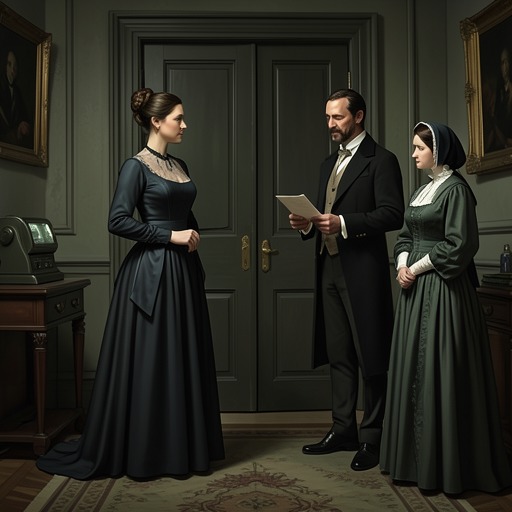
Margaret Pole
The Constant PrincessMargaret Pole is a former Plantagenet princess, the sister of Edward Plantagenet, Duke of Warwick, and, by the time she meets Catalina at Ludlow Castle, the wife of Sir Richard. Her life is shaped by the danger attached to her family’s royal blood: her brother is executed to secure the Tudor succession, while she survives by accepting a different name and a diminished place. Rather than blaming Catalina for a death that helped make the princess’s marriage possible, Margaret offers her a hard-won understanding of power, obedience, and the self that endures beneath changing titles.
Identity and Background
Margaret’s royal birth gives her education and status, but it does not protect her family from political danger. Edward Plantagenet, Duke of Warwick, is taken to the Tower of London, the royal prison, and executed despite having committed no crime. Catalina understands that her parents insisted on his removal before sending her to England: they wanted the succession secured for the marriage alliance they had arranged. To Catalina, that history makes her feel implicated in his death. To Margaret, it is a loss she continues to grieve, but not a reason to condemn the young princess.
Margaret’s own prospects have also been narrowed by the same dynastic insecurity. She tells Catalina that, as a girl, she could change her name, and did so; refusing to marry Sir Richard, she believes, could have put her in the same danger as her brother. Catalina protests that Margaret might have become Queen of England. Margaret answers that the opportunity has passed, as has Catalina’s chance to reclaim the life she once expected. Her counsel is not that either woman can undo the past, but that each must find a way to live without regrets.
Friendship with Catalina
At first, Margaret’s return to Ludlow is a source of dread for Catalina. The princess knows that Margaret is Warwick’s sister and fears she will be hated for the part her marriage played in the Tudor family’s security. When they finally meet, Margaret explicitly refuses that blame. She recognizes that Catalina, her parents, and the king acted within a world where dynastic threats prompted harsh measures; she says she might have acted similarly in their position. Her grief remains real, but she does not turn it into an accusation against the person in front of her.
That meeting changes the emotional character of Catalina’s life at the castle. The woman she had feared becomes a companion who eases her separation from her mother and sisters. Margaret and Catalina share learning as well as confidences: Margaret is fluent in Latin, speaks French with her, and teaches her English. When they lack a word in a language they share, they invent elaborate mimes instead. Their laughter over a demonstration of indigestion and an improvised explanation of English hunting protocol turns the work of communication into a private bond.
Margaret also gives Catalina room to speak about the unsettled dowry negotiations. The two women wait indoors while the men are out hunting, and Margaret does not volunteer what she has heard. She knows that Catalina’s father agreed to a substantial dowry but sent only half the money, proposing that household plate and treasure make up the difference. In the meanwhile, Catalina’s gold plates are used at Ludlow, where ordinary wear diminishes their value. Margaret’s discretion matters in a household where Catalina is caught between the financial demands of Henry VII and her father’s bargaining.
Selfhood, Obedience, and Loss
Margaret’s advice grows from her own sense of what survival has required. She argues that obedience is not simply agreement: a person may think independently and still choose to bow. Catalina recognizes the force of this distinction, and the two women laugh together over the idea of being a merely compliant court attendant. Margaret’s own example is more complicated than a lesson in submission. She has accepted a life far removed from the rank she once possessed, yet insists inwardly that she remains herself whatever title she is given.
That insistence holds together the apparent contradictions in her position. Margaret has been a Plantagenet princess and is now a wife living in the Tudor Borders; she has lost her brother and her former prospects, yet does not define herself only through loss. When Catalina speaks of insisting on what is hers and fulfilling her duty, Margaret cautions that accepting one’s fate may itself be what God requires. The exchange leaves their difference intact: Catalina is determined to shape her future, while Margaret speaks from the knowledge that some chances cannot be recovered.
From Ludlow Companion to Court Ally
After Catalina becomes queen, she brings Margaret back into her life, writing to her and summoning her to court. Their reunion is affectionate, and Margaret promises to be with her. Catalina values her discretion in particular: Margaret never speaks of Arthur, yet understands the cost of Catalina’s marriage and why she has entered it. Catalina sees her as someone who can recognize the continuing place of Arthur in her life while watching her pursue a vision of his England under Harry’s rule.
Their friendship also enters the political work of preparing the next generation. When Catalina questions whether Henry understands the responsibilities ahead of him, he explains that his father had expected him to study for years and had not yet allowed him into the world. Catalina responds that, when they have a son, they will prepare him for kingship from an early age. Margaret’s presence belongs to this future-facing household, which later gives her a direct role in caring for the royal child.
The Nursery and the Queen’s Grief
As Catalina approaches childbirth, Margaret is among the women who accompany her into confinement at Greenwich. She arranges the cradle at the foot of the bed, a practical gesture that also reflects her experience as a mother. Catalina abruptly asks her to take charge of the royal nurseries, seeking the older woman’s advice and comfort; the request is unusually informal for a court appointment that would normally pass through household procedures and consultation.
After the child dies, Margaret, who had been in charge of the nursery, enters the queen’s room without waiting for an invitation and kneels before her. Catalina is seated among her ladies, withdrawn in grief. Margaret comes to beg pardon, though she says she has done nothing wrong. The scene does not provide her explanation or Catalina’s reply, but it shows the intimacy and responsibility their relationship has acquired: Margaret approaches not as a political rival or a distant courtier, but as someone willing to stand beside the queen in the aftermath of loss.